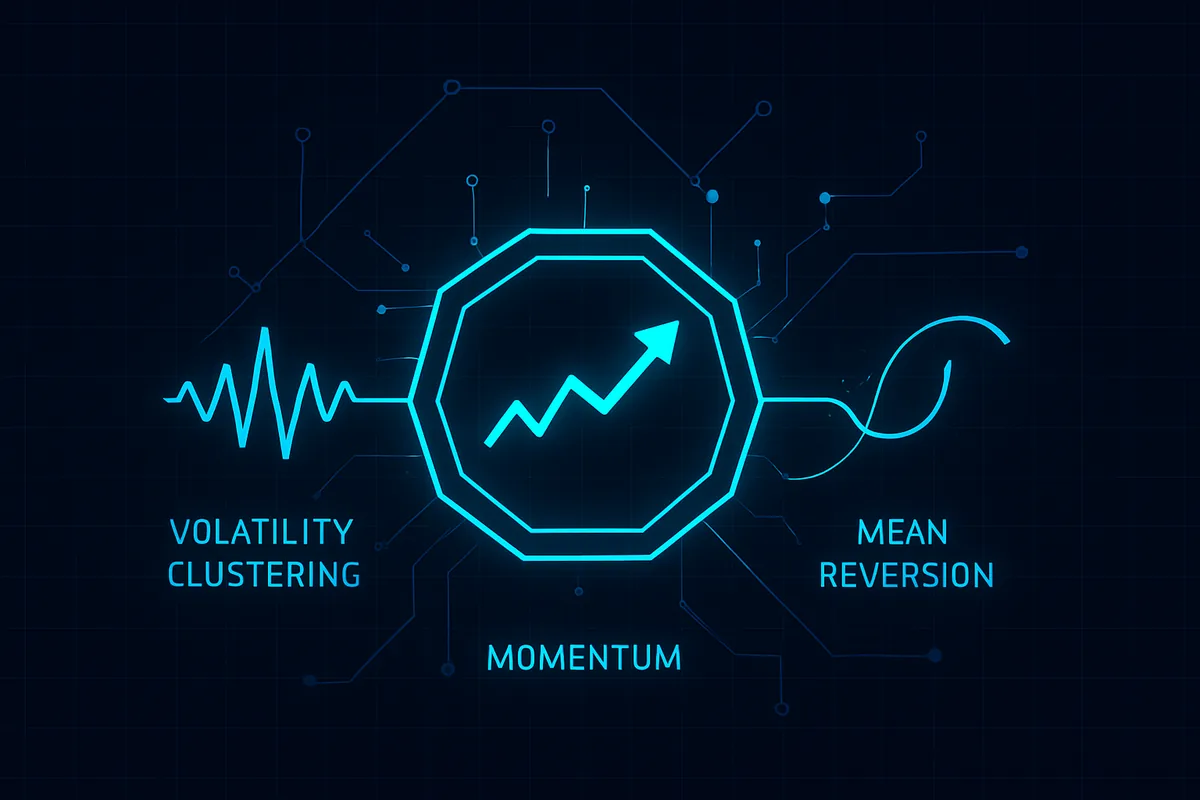
How algorithmic systems decide: trade or stay out of the market
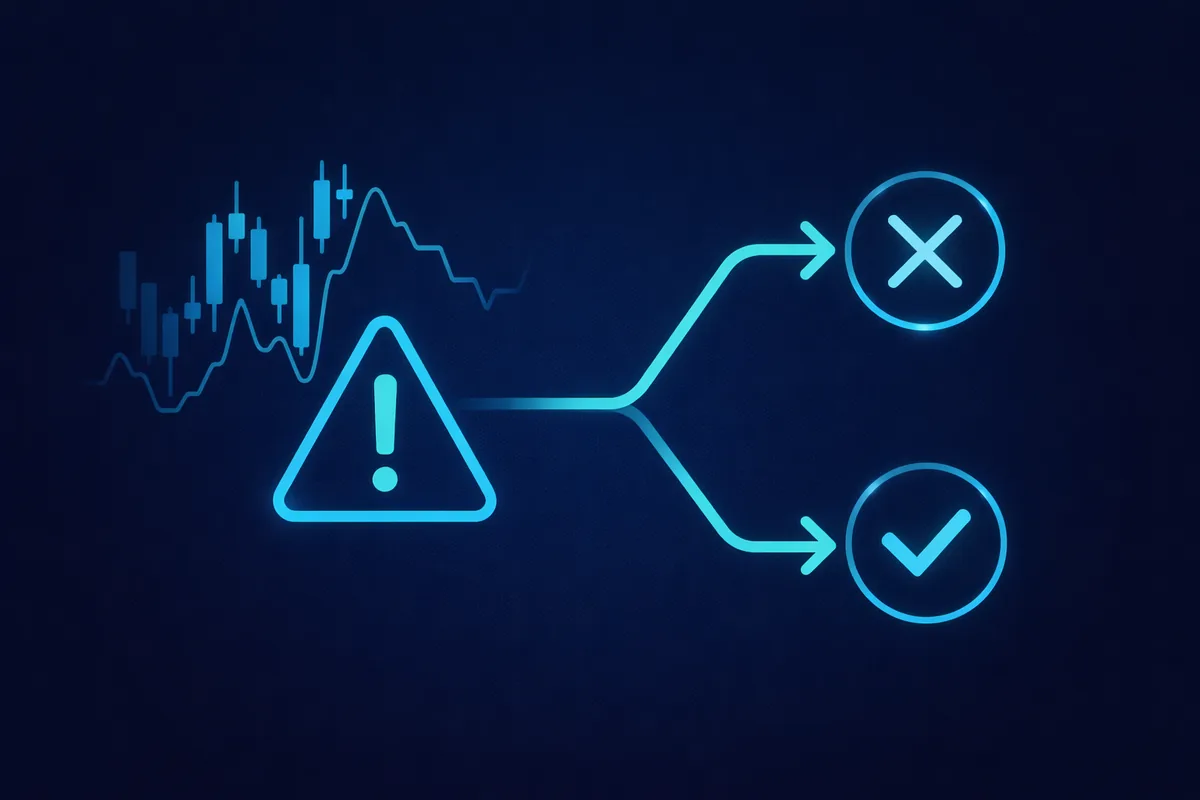
In this article, we explore how algorithmic systems decide whether to trade or stay out of the market, why not trading can sometimes be the most effective strategy, and how IQSF algorithms identify risky market regimes to protect capital and preserve statistical edge.
In the investment world, it is commonly believed that a successful strategy must always be in the market.
In practice, however, one of the key distinctions of professional capital management is the ability not to trade when conditions are unfavorable.
For algorithmic funds, the question of “entering the market or staying out” is often more important than selecting a precise entry point.
Why sometimes it’s better not to trade
Every trade represents not only potential profit, but also the acceptance of risk.
When the market is in a phase of:
- heightened uncertainty,
- low predictability,
- unstable liquidity,
the expected mathematical edge of a strategy declines or disappears entirely.
Under such conditions, active trading turns into guessing rather than systematic probability-based decision-making. For a fund, this means one thing: risk grows faster than potential return.
The market as a set of regimes, not a continuous process
Professional strategies view the market not as a linear movement, but as a set of regimes:
- trending,
- ranging,
- high-volatility,
- stress and liquidity dislocation phases.
Not every strategy performs effectively across all regimes.
Therefore, the task of the algorithm is to identify the current market phase and determine whether a statistical edge exists.
If no such edge is present, the optimal decision is to temporarily move into a neutral, out-of-market position.
Volatility and uncertainty filters
IQ Security Fund employs multi-layered filters that assess market conditions before opening positions.
Key parameters include:
- the level and structure of volatility,
- the speed of price changes,
- market depth and liquidity,
- asymmetry of price movements,
- correlations between instruments.
Sharp volatility spikes unsupported by liquidity or volume often signal not opportunity, but elevated risk.
In such cases, algorithms reduce trading activity or completely block new entries.
How algorithms “recognize” dangerous markets
IQSF’s algorithmic models do not rely on forecasts or subjective judgments.
Decisions are based on deviations from normal market states.
Signals of increased danger may include:
- breakdowns in historical correlations,
- chaotic price impulses without continuation,
- a rise in false breakouts,
- deterioration in order execution quality.
When these patterns begin to dominate, the probability of error exceeds expected returns, and the strategy automatically switches to a defensive mode.
The logic behind reduced activity at IQSF
Reduced activity is not the absence of a strategy — it is an integral part of it.
During periods of market stress, IQSF:
- reduces position sizes,
- lowers trade frequency,
- limits exposure to derivatives,
- may remain entirely out of the market until conditions normalize.
This approach helps to:
- protect capital during periods of uncertainty,
- preserve the strategy’s statistical edge,
- avoid the accumulation of random losses.
Discipline matters more than constant market exposure
For retail traders, “not trading” often feels like a missed opportunity.
For a fund, it is a deliberate investment decision.
The philosophy of IQ Security Fund is built on a simple principle:
it is better to skip a trade than to take risk without mathematical justification.
This discipline forms the foundation of sustainable performance and allows the fund’s strategies to operate effectively over the long term, regardless of market phases.
Frequently asked questions
Why do algorithmic trading systems sometimes choose not to trade?
Every trade carries risk as well as potential profit, and when the market enters a phase of heightened uncertainty, low predictability or unstable liquidity, a strategy's statistical edge shrinks or disappears. Trading under those conditions turns into guessing rather than probability based decision making, so risk grows faster than potential return. Staying out of the market is treated as a deliberate decision, not a missed opportunity.
What market regimes does an algorithmic trading system distinguish?
Professional strategies treat the market as a set of regimes rather than one continuous process: trending, ranging, high volatility, and stress or liquidity dislocation phases. Not every strategy performs well in every regime, so the algorithm's task is to identify the current phase and check whether a statistical edge exists there. If no edge is present, the system moves into a neutral, out of market position.
How does an algorithm recognize a risky or dangerous market?
It looks for deviations from normal market conditions: breakdowns in historical correlations, chaotic price impulses without continuation, a rise in false breakouts, and worse order execution quality. Sharp volatility spikes not supported by liquidity or volume are treated as elevated risk, not opportunity. When these patterns dominate, the strategy automatically switches to a defensive mode.
What does IQSF do during periods of market stress?
During stress, IQSF reduces position sizes, lowers trade frequency, limits exposure to derivatives, and may stay entirely out of the market until conditions normalize. This is meant to protect capital during uncertainty, preserve the strategy's statistical edge, and avoid the accumulation of random losses. Reduced activity is treated as part of the strategy, not the absence of one.