SMA, fund, or copy trading: where investor money is held and who has access to it
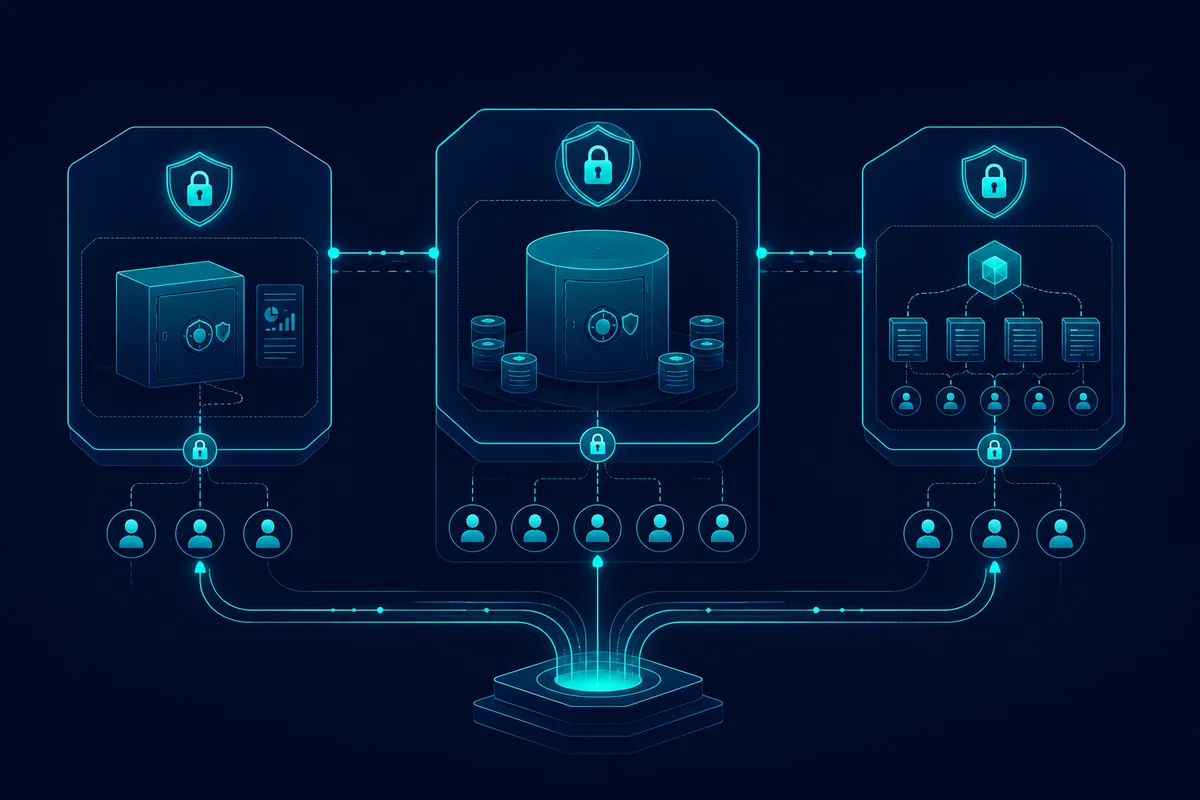
In this article, we’ll explore how SMA, fund structures, and copy trading differ, where investor money is actually held in each format, and why the key question is not only who manages the capital, but who can technically withdraw it.
Before comparing returns, it is worth finding out whose name the account is opened under and who is technically able to withdraw money from it. These are different questions, and the second one is more important than the first: a loss from an unsuccessful strategy can be recovered, but losing access to capital cannot.
Below, we look at three formats for transferring money into management. For each one, we explain where the funds are physically held, who has access to them, and what happens in case of manager bankruptcy, hacking, or account restrictions. At the end, there is a list of questions that remove most counterparty risk.
Format one: separate managed account
The account is opened in the investor’s name, in their own exchange or brokerage account. The manager receives access through an API key with limited permissions: they can trade, but they cannot withdraw funds.
This structure is called a separate managed account, or SMA.
Where the money is held. In the investor’s account. The investor can see the funds in their own dashboard at any time, independently of the manager.
Who has access. The manager has trading access, while withdrawal access remains only with the investor. The key is created by the investor and can be revoked by the investor in one click.
In case of manager bankruptcy. The funds are not affected: they were never held by the manager. The investor revokes the key and continues to own the account.
In case the manager is hacked. The worst thing an attacker can do with a trading key that has no withdrawal rights is open losing positions. This is bad, but finite and limited by the size of the account. The attacker cannot technically withdraw the money.
Weak point. The investor is fully responsible for their own security: exchange password, two-factor authentication, and phishing protection. In this format, the manager is not the security layer.
Format two: fund with pooled capital
Investor money is transferred into a common pool, and trading is carried out through the fund’s accounts. The investor owns a share in the fund, not a position on the exchange.
Where the money is held. In the fund’s accounts, which legally belong to the fund, not to the investor directly.
Who has access. The management company has access within the limits set by the fund documents. The restrictions are enforced not by technology, but by the legal structure: charter documents, depositary, audit, and license.
In case of manager bankruptcy. It depends on the structure. In a regulated structure, the fund’s assets are separated from the assets of the management company and are not included in its bankruptcy estate. In an unregulated structure, such separation may not exist at all.
In case of hacking. The investor does not participate in the response process and learns about the incident from the manager.
Weak point. The quality of protection is fully determined by the legal structure and the integrity of third parties: administrator, depositary, and auditor. This can only be verified through documents, not through technology.
Strong point. A properly structured fund provides what a separate account does not: independent asset valuation, regular audit, and external oversight. This is exactly why institutional investors prefer fund structures.
Format three: copy trading on an exchange
The investor subscribes to a manager inside an exchange platform. The manager’s trades are automatically copied to the subscriber’s account.
Where the money is held. In the investor’s exchange account, in a dedicated section allocated for copy trading.
Who has access. Technically, the manager has no access to the investor’s account at all: the copying is performed by the exchange itself. The manager trades on their own account, and the platform mirrors the trades.
In case of manager bankruptcy. The investor’s funds are not affected. The subscription is stopped, and positions are closed.
In case of exchange problems. This is where the main risk shifts: both sides are inside the same platform, and the risk is concentrated there. Account restrictions, withdrawal freezes, or exchange failure affect all participants at the same time.
Weak point. The investor sees very little of what is happening inside: final statistics are available, but not the logic behind decisions. In addition, copy settings such as coefficient and maximum exposure are often configured rather roughly.
Comparison table
| Feature | Separate account | Fund | Copy trading |
|---|---|---|---|
| Whose name is the account under? | Investor | Fund | Investor |
| Who can withdraw funds? | Only the investor | Management company | Only the investor |
| Visibility of trades | Full, in the account | Through reports | Partial |
| In case of manager bankruptcy | Not affected | Depends on the structure | Not affected |
| Main risk | Personal security | Legal structure | Exchange risk |
| Entry threshold | Usually higher | Often high | Low |
| Independent audit | Usually no | Yes, in regulated structures | No |
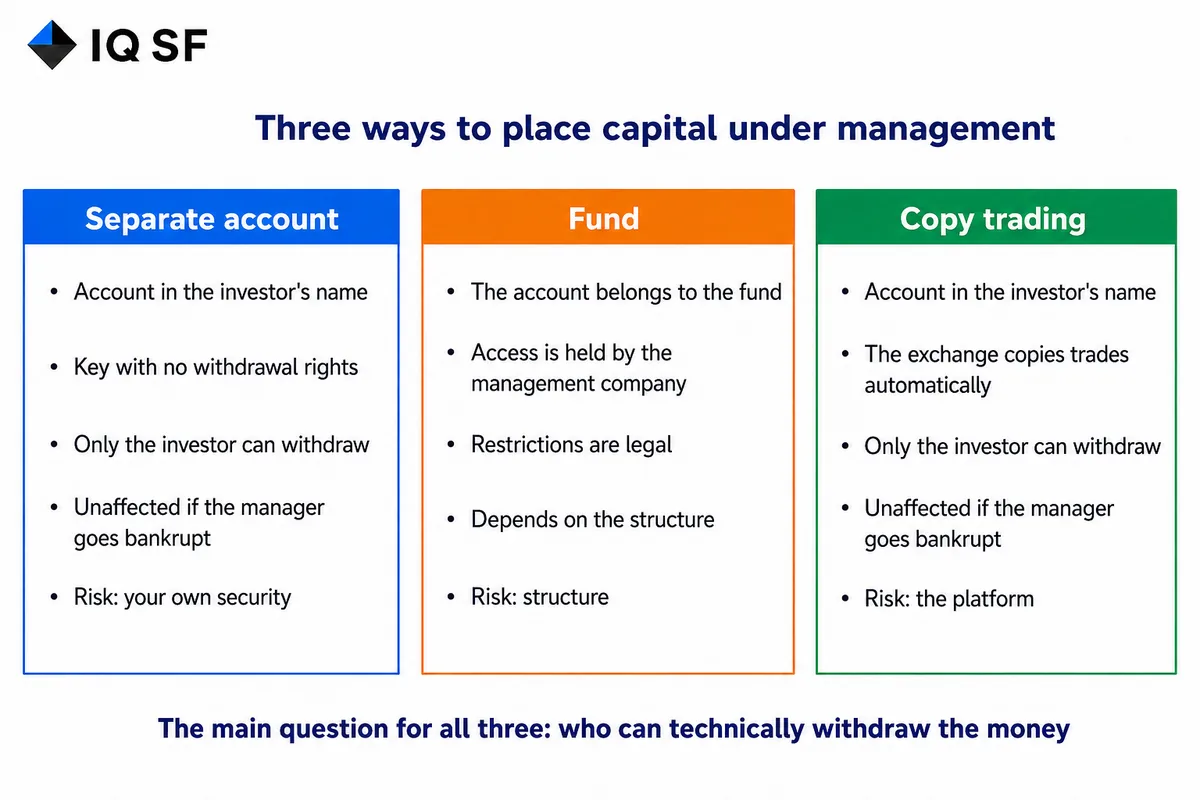
Chart 1. Three formats and one key question for all three: who can withdraw funds
Why a trading key without withdrawal rights is the key element, not a formality
On most exchanges, when an API key is created, permissions are assigned separately: reading, trading, and withdrawal. These are three independent switches.
For capital management, only the first two are needed. The third is never needed, and enabling it has no legitimate explanation. A manager does not need the ability to send money to an external address in order to trade.
In addition, many platforms allow the key to be tied to a specific IP address. In that case, even a stolen key is useless from another computer.
The practical rule is simple: if you are asked to provide an API key with withdrawal rights or to send your exchange password, the conversation ends there. No explanation about convenience, technical necessity, or strategy specifics changes the fact that this is the only reason money can be lost entirely.
What to check in each format
For a separate account:
- Permissions of the API key: make sure withdrawal is disabled;
- IP binding for the key, if the exchange supports it;
- Ability to revoke the key independently, without contacting the manager;
- Whether two-factor authentication is enabled on the account itself;
- Whether a withdrawal address whitelist is enabled on the exchange.
For a fund:
- Jurisdiction and license, if one is required;
- Who acts as administrator and depositary — these should be independent parties;
- Who the auditor is and whether there is a public audit report;
- Whether the fund’s assets are separated from the assets of the management company;
- Exit procedure and redemption timelines.
For copy trading:
- How large the platform is and how long it has been operating;
- Whether it is possible to disconnect in one click;
- What copy settings are available;
- Whether full statistics are published or only the final equity curve.
Questions to ask before transferring money
First: whose name is the account holding my money opened under? The answer should be unambiguous.
Second: who can technically withdraw funds from this account? The correct answer for a separate account and copy trading is: only me. For a fund, the answer will be different, and the next question should be what structure limits that access.
Third: what happens to my money if your company ceases to exist tomorrow? A good manager answers this specifically and without irritation, because this question matters to them as well.
Fourth: how do I end the relationship, and how long does it take? The ability to exit quickly and without someone else’s involvement is part of the structure, not a sign of distrust.
Short conclusion
All three formats can work. Each has its own risk profile, and the choice depends on the amount, jurisdiction, and what matters more to you: control or independent infrastructure.
But one principle applies to all of them: risk should be market risk, not counterparty risk. The investor accepts that a strategy can lose money in the market. The investor does not accept that money can disappear for reasons that have nothing to do with the market at all.
The question of where the money is held and who has access to it separates the first type of risk from the second. It takes five minutes to ask and should be asked before transferring funds, not after.
Frequently asked questions
What is a separate managed account (SMA)?
A separate managed account is opened in the investor's own name at their exchange, and the manager gets access only through an API key with trading permissions, not withdrawal rights. The investor can see the funds in their own dashboard at any time and can revoke the key in one click. If the manager goes bankrupt or gets hacked, the funds are not affected beyond losing positions, since withdrawal was never technically possible.
What happens to investor money if a fund manager goes bankrupt?
It depends on the structure: in a regulated fund, the fund's assets are legally separated from the management company's assets and excluded from its bankruptcy estate, while an unregulated structure may have no such separation. This differs from a separate account or copy trading, where the investor's funds are unaffected because the money never left the investor's own account. The legal structure of a fund matters as much as its trading results.
Is copy trading safe for investor funds?
Only partly: in copy trading, money stays in the investor's own exchange account in a section dedicated to copying, and the manager has no access since the exchange mirrors the trades, so manager bankruptcy leaves funds unaffected. But the main risk shifts to the exchange: account restrictions, withdrawal freezes or an exchange failure affect all participants at the same time. Investors also see only final statistics, not the logic behind decisions.
What should an API key never include when delegating trading to a manager?
An API key given to a manager should never include withdrawal rights, since only reading and trading permissions are needed to manage capital. With a trading-only key, the worst an attacker can do is open losing positions limited by the account size, while a key with withdrawal rights is the one way money can be lost entirely. Many exchanges also allow binding a key to a specific IP address, making even a stolen key useless elsewhere.