Strategy in drawdown: add capital, exit, or wait, and how to tell the difference
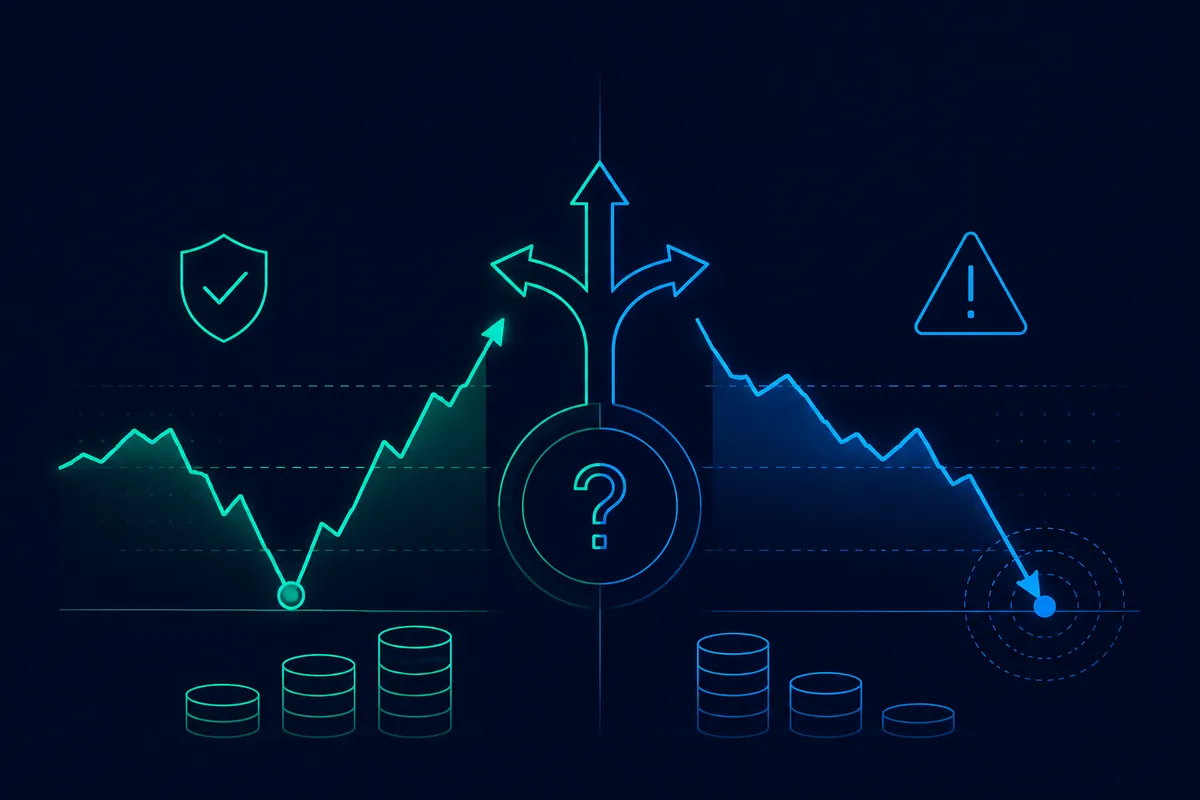
In this article, we’ll explore how to distinguish a normal drawdown from strategy degradation, when adding capital makes sense, when it is better to stop, and why having a predefined plan helps avoid emotion-driven decisions.
The right action during a drawdown depends on one question: is the strategy still working as designed? If it is, the drawdown should be allowed to run its course, and if additional capital is available, it can be used to increase the position. If it is not, the strategy should be stopped and investigated, regardless of how deep the account has fallen.
Below, we explain how to distinguish between these two situations using verifiable signs rather than emotions, why adding capital can help during a drawdown but is useless against liquidation, and how much money you actually need to keep in reserve if your plan includes additional funding.
First: determine what is actually happening
A drawdown and strategy degradation can look exactly the same: the account is losing money. The difference lies not in the depth of the decline, but in whether the strategy’s mechanics are behaving as expected.
Signs of a normal drawdown:
- Signals are generated at roughly the same frequency as before
- Trades are opened where the rules say they should be
- Stops are triggered at the expected levels
- Slippage remains within its normal range
- The depth of the drawdown remains within historical boundaries
- The market is currently in a regime that is unfavorable for this approach
Signs of strategy degradation:
- Trades are opened where the rules say they should not be, or are not opened where they should be
- Slippage has increased several times over, and orders are no longer executed near expected prices
- Losses have exceeded anything observed in the verified historical record
- The environment has changed: exchange rules, fees, or instrument liquidity
- There has been manual intervention in the system
The first list means: change nothing. The second means: stop and investigate, even if the account is still profitable overall.
There is also a separate case that is checked far less often: the strategy is making money, but not from the source it is supposed to. For example, a strategy is designed to be trend-following, but all of its quarterly profit came from random trades during a sideways market, while its trend signals produced losses. Formally, everything looks fine. In reality, the model is not working as intended. This is just as valid a reason for investigation as an unexplained loss. It is simply more pleasant and therefore easier to ignore.
Second: compare the drawdown with the historical norm
The depth of the current drawdown means little on its own. What matters is how it compares with what has happened before.
If a strategy’s historical maximum drawdown is 30%, then a current drawdown of 18% is within its normal operating range, not an extraordinary event. If its historical maximum drawdown is 12%, the same 18% represents a move outside the model’s historical boundaries and requires investigation.
This number should be known before entering the strategy, not discovered along the way. A manager who cannot state the strategy’s historical maximum drawdown and the period over which it was measured does not give you the information needed to distinguish normal behavior from a potential failure.
The second number investors often forget to ask about is maximum drawdown duration, meaning the longest period between a previous account high and the recovery back to that level.
A 20% drawdown lasting one month and a 20% drawdown lasting fourteen months are very different experiences. The second breaks the discipline of many investors because every month brings another report showing little or no improvement.
Third: understand what adding capital does and what it does not do
This is where one of the most important practical misconceptions appears.
Adding capital can help during a drawdown. Adding funds to an account that has declined increases the capital base, reduces the relative exposure, and gives positions more room to survive until conditions reverse. In addition, capital is being added at lower prices, which can be beneficial when the strategy has positive expected value.
Adding capital does not solve liquidation risk. If a position is too large relative to the account balance, an adverse market move can trigger forced liquidation before additional funds meaningfully move the liquidation threshold. Adding more capital to such a position can simply increase the total amount lost.
The distinction is fundamental.
A drawdown is reversible: the account remains active and can recover.
Liquidation is irreversible: once liquidation occurs, there is no longer an existing position or account balance waiting to recover. Any restart begins with new capital and a new starting point.
That is why liquidation risk is not solved by adding money at the last moment. It is managed through position sizing determined in advance.
If the structure is such that a certain market move can wipe out the account, the question of adding capital is already secondary. The real problem lies in the original position size.
Fourth: calculate how much capital you need to keep in reserve
If the plan includes adding capital during drawdowns, the required amount should be calculated before entering the strategy, not when the money is suddenly needed.
The process is straightforward. Start with the strategy’s historical maximum drawdown. Define the funding rule: at what drawdown level additional capital will be added and in what amount. Then test that rule against historical data: how many times would it have been triggered, and how much additional capital would have been required in total?
The result is often uncomfortable.
During a calm six-month period, the rule might be triggered once or twice and require roughly one-tenth of the original deposit. But over a longer period that includes an extreme market move, the picture can change completely: the rule may be triggered several times during a single trading session, requiring additional capital equal to several times the original deposit.
The practical conclusion is simple: the reserve for additional funding should be based not on average monthly needs, but on the worst historical episode.
And that reserve must remain accessible rather than being locked in illiquid assets, because you do not get to choose when it will be needed.
There is also an uncomfortable point worth stating directly: if the required reserve is not available, then a plan based on adding capital does not work. It does not merely work less effectively. It does not work as designed. Half a plan means partial execution with full exposure to the risk.
Fifth: do not make decisions at the moment of maximum pain
All of the checks above require data and take around half an hour. Exiting at the bottom of a drawdown requires no data and takes seconds. That is exactly why the second option so often wins.
The solution is not willpower. It is a decision made in advance.
The 72-hour rule. Any decision to change or stop a strategy takes effect three days after it is made. During that period, many panic-driven decisions disappear on their own.
A one-page plan written before entering. What will I do at a 10%, 20%, or 30% drawdown? What counts as a reason to stop, and what does not? How much additional capital will I contribute, and under what conditions? A written plan becomes surprisingly powerful when everything is falling.
Limit how often you check performance. Looking at the account every day does not necessarily provide useful information. It often provides anxiety. Over short intervals, noise greatly exceeds signal. Once a week is usually enough. For longer-term strategies, once a month may be sufficient.
Review on a schedule, not according to how you feel. Go through the strategy degradation checklist once a month whether the account is rising or falling. That keeps it as an analytical tool rather than turning it into a last resort during panic.
Four questions to ask during a drawdown
When emotions are running high, answering prepared questions is easier than trying to formulate a new decision from scratch.
Has anything changed in the strategy itself, or has only the market changed?
Is the current drawdown within the range already observed historically?
What will I do if the recovery starts tomorrow, and what will I do if it starts four months from now?
If I did not already have this position, would I enter it at the current price?
The last question is especially useful. It removes the psychological attachment to the entry point and shifts the decision from the past to the present: not “How much have I lost?” but “What makes sense to do now?”
What to do in each of the three cases
Normal drawdown.
If the strategy mechanics are working as expected and the depth of the drawdown remains within historical boundaries, change nothing. If additional capital is available and adding funds was part of the plan from the beginning, additional capital may be contributed.
Strategy degradation.
If behavior deviates from the model, execution is impaired, or losses have moved beyond historical boundaries, stop the strategy and investigate. Do not allocate additional capital until the review is complete.
Profit coming from the wrong source.
If the account is growing, but the source of the profit does not match the strategy’s intended logic, investigate it in the same way as strategy degradation.
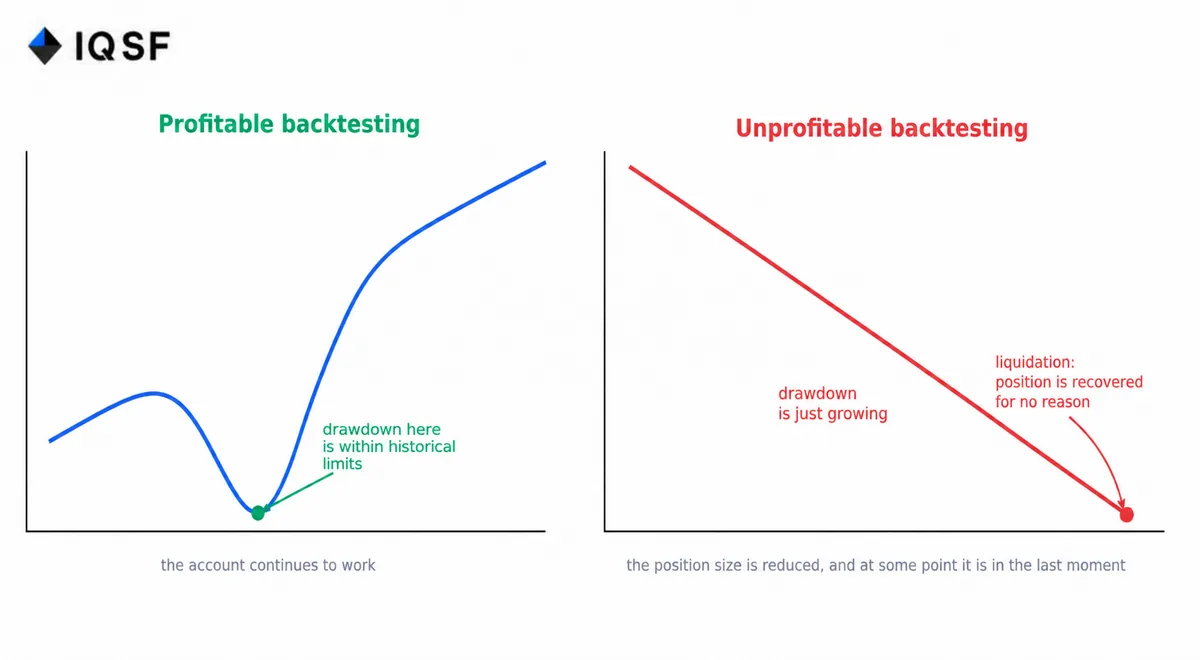
Chart 1. Adding capital can help during a drawdown but cannot protect against liquidation.
Conclusion
A drawdown is not, by itself, a signal to take action. The real signal is when a strategy moves outside the boundaries of how it is designed to operate, and those two events do not always happen at the same time.
The only reliable protection against making the wrong decision at the wrong moment is a set of verifiable criteria and a plan written in advance. Everything else, including discipline and emotional control, tends to work less reliably during a real drawdown than investors expect.
And one final point is worth remembering: the most expensive form of caution is paying the full price of risk without receiving its potential compensation. That is exactly what happens when an investor sits through the entire drawdown, exits at the bottom, and then watches the recovery from the sidelines.
Frequently asked questions
How do you tell a normal drawdown apart from strategy degradation?
Check whether the strategy's mechanics are still behaving as designed rather than just looking at how much money has been lost. In a normal drawdown, signals still appear at the usual frequency, trades open where the rules say they should, and the depth stays within historical boundaries, while degradation shows up as trades violating the rules, slippage increasing several times over, or losses exceeding anything seen in the verified history.
Can adding capital during a drawdown protect against liquidation?
No, adding capital helps a drawdown but does nothing against liquidation risk. If a position is too large relative to the account balance, an adverse market move can trigger forced liquidation before additional funds meaningfully shift the liquidation threshold, so adding more money to an oversized position can simply increase the total loss. A drawdown is reversible while liquidation is not.
How much money should an investor keep in reserve for adding capital during drawdowns?
The reserve should be sized to the worst historical episode, not to an average month. Testing a funding rule against history often shows it triggering once or twice during a calm six-month period and needing roughly a tenth of the original deposit, but during a period with an extreme market move the same rule can trigger several times in a single session and require several times the original deposit.
What practical steps help investors avoid panic decisions during a drawdown?
Write a one-page plan before entering the strategy that states what you will do at a 10%, 20%, or 30% drawdown, and apply a rule that any decision to change or stop the strategy only takes effect three days after it is made, since many panic-driven decisions fade on their own during that delay. It also helps to limit how often you check performance, since daily checking tends to produce anxiety rather than useful information.