Why investors earn less than the strategy: the gap between the chart and investor behavior

In this article, we’ll explore why investors can earn less than the strategy itself, how decisions made during drawdowns affect the final outcome, and which rules can help prevent a temporary decline from turning into a realized loss.
This is the biggest gap between how people choose a strategy and how they actually live with it.
At a meeting, they are shown a five-year chart. It looks calm, and the drawdowns appear as small dips. The investor looks at it and says: I understand, I can handle that.
Six months later, they are inside one of those dips. From the inside, it looks completely different.
Why a drawdown feels different from the inside than it looks on a chart
On a five-year chart, a drawdown takes up a centimeter horizontally. In real life, that centimeter lasts four months.
Four months of opening the report every day and seeing a loss. Four months in which there is no visible end to the decline, because the right side of the chart has not been drawn yet. In historical data, you can see that the decline was followed by a recovery. In real time, there is only empty space ahead.
The difference between these two states is exactly why investors often achieve worse results than the strategies they invest in.
This phenomenon has been measured. Research firm Morningstar has published estimates for years showing the gap between fund returns and the returns actually earned by fund investors. The gap is consistently meaningful, and the reason is always the same: money flows in after good periods and flows out after bad ones. The fund produces one result, while the average investor in that fund earns less because they were not invested throughout the entire period. Their participation was selective, and their timing was poor.
There is no deception involved. People simply enter when things feel safe and exit when they feel frightening, while markets tend to reward the opposite behavior.
Three investors in the same strategy: panic, inaction, and adding capital
Take one strategy, one period, and three different investors.
The first investor panics. They exit at the bottom of the drawdown, when they can no longer tolerate the losses. They lock in the loss and watch the recovery from the sidelines, sitting in cash. Most likely, they will not return: getting back in would mean buying at prices higher than those at which they exited, and psychologically that is extremely difficult.
The second investor does nothing. They stay through the entire drawdown, wait for the recovery, and receive the full result of the strategy. Their total number of actions during the entire period: zero.
The third investor adds capital near the bottom because that decision was made in advance, in writing, before the investment began. They achieve a result above that of the strategy because they added exposure at a lower price.
The strategy is exactly the same for all three investors. The only difference is behavior, and that difference can be greater than the difference between a good strategy and a mediocre one.
The third scenario deserves special attention. It may look like courage, but in reality it is the result of preparation. Almost no one can calmly decide to add capital at the moment of maximum fear unless that decision was made beforehand. At the bottom, you can execute an existing plan. It is not the right moment to create one.
Why you cannot simply “be disciplined”
The advice to keep emotions under control is not very useful because emotions do not ask for permission.
What works better is removing the need to make decisions while you are in a bad emotional state.
First. Write a plan before entering. What will I do at a 10% drawdown, at 20%, at 30%? What would indicate that the strategy should be stopped, and what would not? A plan written by hand can have surprising power when everything is falling.
Second. Limit how often you check performance. Looking at the report every day does not provide more useful information. It creates anxiety because, over short intervals, noise is much greater than signal. Once a week is enough, and for longer-term strategies, once a month may be sufficient.
Third. Invest an amount where losing part of it would not change your life. This may sound obvious, but position size largely determines whether you make decisions rationally or emotionally. The same 30% drawdown feels completely different when the investment represents 5% of your capital versus half of it.
Fourth. Separate the decision from its execution. The rule is simple: any decision to change or stop the strategy takes effect 72 hours after it is made. Within three days, many panic-driven decisions disappear on their own.
Investor cognitive biases: the four main ones
In addition to fear, several persistent cognitive biases affect investment decisions. It helps to know them by name because identifying a bias can reduce some of its influence.
Anchoring to the entry price. An investor evaluates a position relative to the price at which they entered, even though the market neither knows nor cares about that price. This leads to statements such as “I’ll sell as soon as it gets back to my entry price,” which have nothing to do with the future prospects of the asset.
Loss aversion. The pain of a loss tends to feel roughly twice as strong as the pleasure of an equivalent gain. As a result, a 20% drawdown feels like an event that demands action, while a 20% gain is often accepted calmly as something normal.
Recency bias. Recent events feel more important than older ones. Three bad months can outweigh two good years in an investor’s perception, even when the numbers suggest the opposite.
Illusion of control. Taking action feels better than doing nothing because action restores a sense of control. In investing, this can be one of the most expensive feelings: many actions taken during a drawdown make the final result worse.
None of these biases can simply be switched off through willpower. But each can be managed with predefined rules that make decisions for you when clear thinking becomes difficult.
Investment plan: six questions to answer before investing
The plan does not need to be long. It is enough to answer six questions before entering the strategy.
What amount am I investing, and what percentage of my total capital does it represent?
What is my investment horizon? When do I plan to evaluate the result? It should not be one month or one quarter.
What drawdown do I consider normal, both as a percentage and as an actual amount of money that I am comfortable saying out loud?
What will I do during a drawdown: nothing, add capital at a predefined level, or contribute according to a schedule regardless of price?
What conditions would make me exit? These should relate to how the strategy is functioning, not to how I feel.
How often will I check the report, and whom will I call if I feel tempted to break the plan?
The last point may sound less serious than the others, but it can be surprisingly effective. Saying out loud to another person that you want to exit at the bottom often sounds much less convincing than it does inside your own head.
Four questions to ask yourself during a drawdown
It helps to prepare questions in advance because when you are under stress, answering questions is easier than trying to formulate a rational course of action from scratch.
Has anything changed in the strategy itself, or has only the market changed?
Is the current drawdown within the range of what has already occurred historically?
What will I do if the recovery begins tomorrow, and what will I do if it begins four months from now?
If I did not already have a position, would I enter at the current price?
The last question is especially useful. It removes the anchoring effect of the original entry price and brings the decision back to the present: not “how much have I lost?” but “what makes sense to do now?”
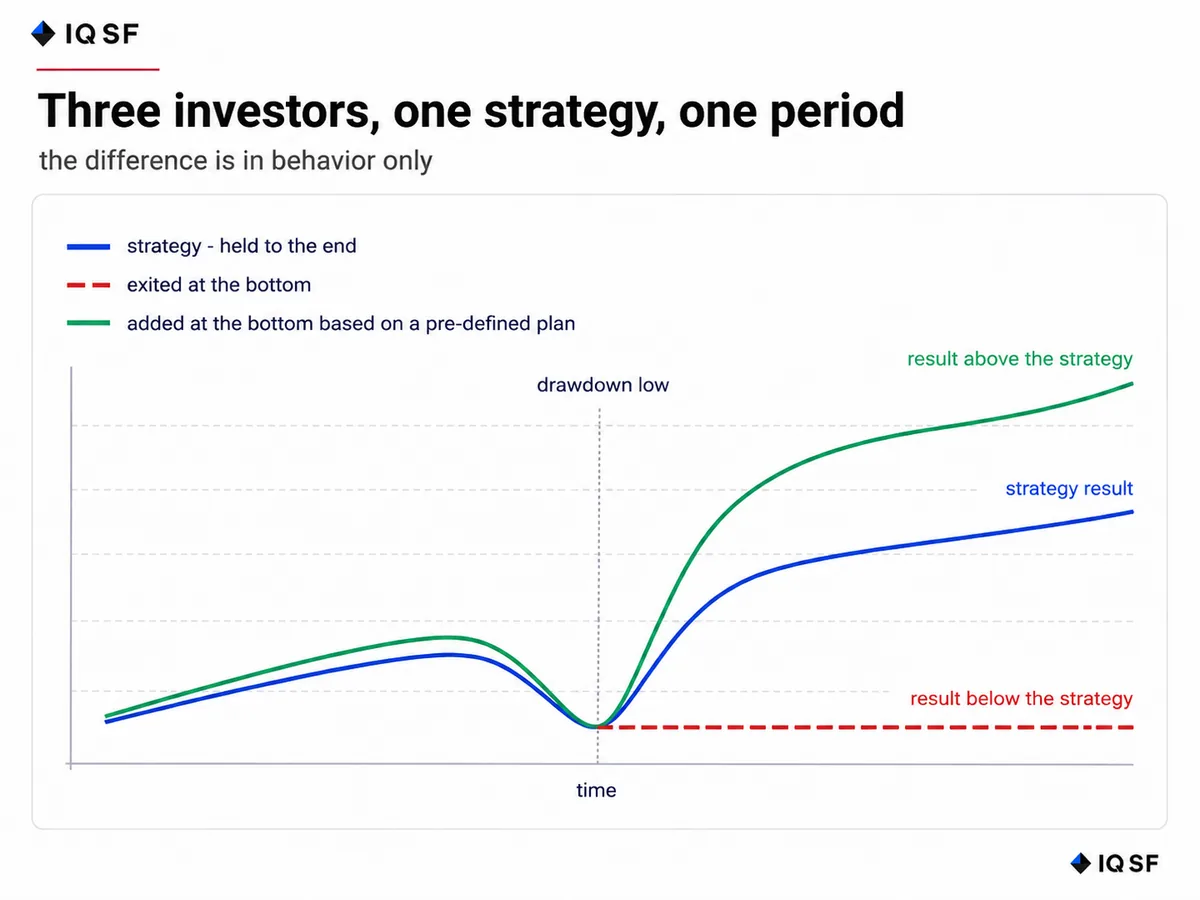
Chart 1. Three decisions within the same strategy lead to three different outcomes
Frequently asked questions
Why do investors often earn less than the strategy they invested in?
Investors often earn less than the strategy because money tends to flow in after good periods and out after bad ones, so the average investor is not in the position the entire time. Morningstar has published estimates for years showing a meaningful gap between fund returns and what investors actually earn. A drawdown looks small on a five-year chart, but living through it can mean four months of watching a loss with no visible end.
What is the difference between the three investors who all used the same strategy?
The first investor panics and exits at the bottom of the drawdown, locking in the loss and watching the recovery from the sidelines. The second does nothing, stays through the entire drawdown, and receives the full result of the strategy. The third adds capital near the bottom because that decision was written down in advance, and ends up with a result above the strategy because exposure came at a lower price.
What rules help prevent panic decisions during a drawdown?
Useful rules include writing a plan before entering stating what to do at a 10%, 20%, or 30% drawdown, and limiting how often you check performance, since daily checks create anxiety without useful information. Investing an amount that would not change your life if lost also keeps decisions rational. A further rule: any decision to stop the strategy takes effect 72 hours after it is made, since panic decisions often disappear within three days.
What are the main cognitive biases that hurt investment decisions?
Anchoring to the entry price makes investors judge a position by what they paid rather than its future prospects. Loss aversion means a loss feels roughly twice as strong as an equal gain, so a 20% drawdown feels like it demands action while a 20% gain is accepted calmly. Recency bias makes recent events, like three bad months, feel more important than two good years, and the illusion of control makes acting feel better than doing nothing.