Trading bots: why most fail to generate sustainable returns
In this article, we explore why most trading bots fail to deliver sustainable returns, what causes the gap between backtests and live trading, and how IQSF’s institutional, systematic approach fundamentally differs from retail trading solutions.
Algorithmic trading has long become an integral part of modern financial markets. Today, automated trading solutions are accessible to a wide range of participants — from private investors to professional teams. However, alongside this growing accessibility, the market has seen a proliferation of simplified solutions offered as ready-made “trading bots.”
In practice, the majority of such solutions fail to demonstrate sustainable performance over the long term. The issue lies not in algorithmic trading itself, but in the lack of a systematic approach to risk management, adaptation to changing market regimes, and control over strategy scalability.
In this article, we explore why this happens — and how a professional, institutional approach fundamentally differs from retail trading bots.
Impressive backtests vs. live trading reality
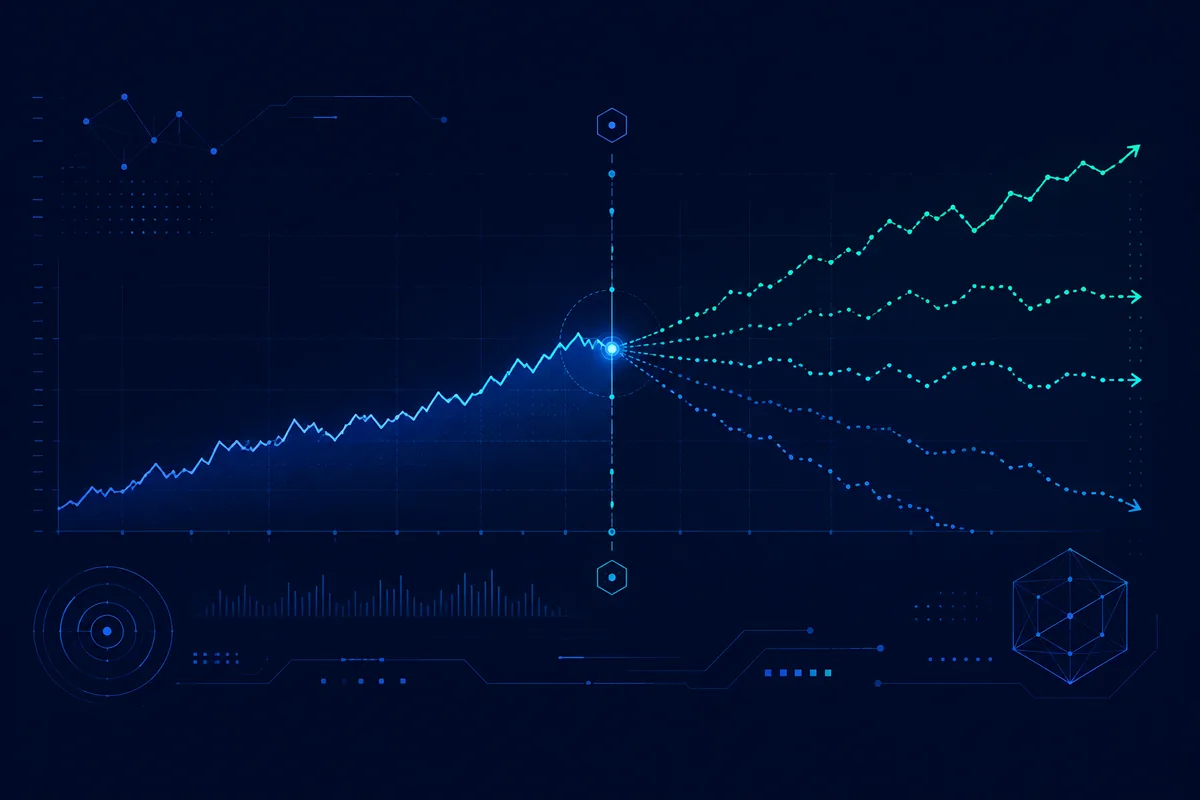
One of the main sources of disappointment is the gap between backtests and real-world performance.
In bot presentations, it is common to see:
- smooth equity curves,
- hundreds of percent in returns,
- minimal drawdowns.
The problem is that a backtest reflects the past, while the market is a dynamic and evolving environment.
In live trading, strategies face:
- slippage,
- commissions,
- execution delays,
- changing liquidity conditions,
- new market regimes.
A strategy that looks perfect in historical simulations may stop working immediately after deployment. Most retail bots fail to survive even the first significant market shift.
Overfitting to historical data
Another structural issue is overfitting — excessive optimization to past data.
Bot developers often tune parameters so that the strategy performs “perfectly” over a specific historical period. As a result, the bot does not trade the market — it trades the past.
Common signs of overfitting include:
- an excessive number of parameters,
- “magic” settings without economic justification,
- unrealistically high returns with no logical explanation.
Once market behavior deviates from historical patterns, such strategies begin to lose money. The more impressive the backtest, the higher the risk that the strategy has been over-optimized.
Lack of robust risk management
Many trading bots focus primarily on entry signals while neglecting the most critical component — risk management.
Typical issues include:
- no limits on consecutive losses,
- aggressive averaging,
- increasing position size in unfavorable conditions,
- lack of correlation control across positions.
During favorable market phases, such bots may generate profits.
During adverse scenarios, a single unfavorable event can wipe out the entire account.
Professional strategies prioritize capital preservation first — profits come second.
The scalability problem
Even if a bot performs well on a small account, this does not mean it will:
- withstand an increase in capital,
- maintain efficiency at higher volumes,
- execute trades without performance degradation.
Market liquidity is limited.
Strategies that demonstrate strong results on small capital allocations often lose stability when trading volumes increase due to liquidity constraints and deteriorating execution quality.
Most retail bots:
- are not tested at scale,
- do not account for market impact,
- are not designed for long-term capital management.
The IQSF approach: how systematic management differs from a trading bot
The key distinction of a professional approach is not merely the presence of an algorithm, but the system built around it.
At IQSF, trading is not a single bot with fixed parameters, but a comprehensive system of capital and risk management.
1. Strategies as part of an integrated system
Algorithms operate within a unified architecture, incorporating:
- strict risk limits,
- correlation control,
- market regime analysis.
When market conditions deteriorate, activity is reduced — strategies do not trade at any cost.
2. Risk сontrol takes priority over entry signals
Most retail bots emphasize signal generation.
At IQSF, the priority lies in:
- drawdown limitation,
- control of loss sequences,
- capital protection during unfavorable market phases.
This is why strategies may appear less aggressive, yet remain resilient over the long term.
3. Scalability as a core design requirement
Strategies are developed from the outset with liquidity considerations and the ability to manage significant capital.
This fundamentally differentiates a systematic approach from bots designed only for small accounts.
4. Transparency and continuous performance tracking
One of IQSF’s key differentiators is daily performance tracking (daily PnL).
Performance statistics have been recorded continuously, on a daily basis, for more than six years, allowing:
- analysis of strategy behavior across different market regimes,
- assessment of not only returns but also drawdown characteristics,
- a clear view of real, unfiltered trading results.
5. Managing probabilities, not promises
The IQSF approach is not built on the idea of “always making money.”
It is built on managing expected value across:
- growth phases,
- stagnation periods,
- drawdowns — all of which are inherent components of a systematic strategy.
The objective is not to predict the market, but to survive all market phases without critical losses.
Conclusion
Most trading bots fail not because algorithms do not work, but because they lack a structured system, disciplined risk management, and a long-term performance record.An algorithm can be purchased.
A proven approach, validated by years of daily trading history, cannot.
Frequently asked questions
Why do trading bots that look great in backtests often fail in live trading?
Backtests often show smooth equity curves, hundreds of percent in returns, and minimal drawdowns because they reflect the past, while live trading adds slippage, commissions, and market regimes never faced before. A strategy that looks perfect in simulations can stop working right after deployment, and most retail bots fail to survive the first big shift. The gap comes from treating a simulation of the past as a guarantee about the future.
What is overfitting and how can you spot it in a trading bot?
Overfitting happens when developers tune parameters so a strategy performs perfectly over one specific historical period, so the bot ends up trading the past rather than the market. Common signs include an excessive number of parameters, magic settings with no economic justification, and unrealistically high returns with no logical explanation. The more impressive the backtest looks, the higher the risk of over-optimization.
Why does a bot that works on a small account often fail at scale?
A bot that performs well on a small account does not necessarily withstand more capital, keep its efficiency at higher volumes, or execute trades without performance loss, since market liquidity is limited. Strategies with strong results on small capital often lose stability as volumes grow, due to liquidity constraints and worse execution. Most retail bots are not tested at scale or built for long-term capital management.
How does IQSF's systematic approach differ from a typical trading bot?
IQSF builds trading as a comprehensive system, not a single bot with fixed parameters: strategies operate inside a unified architecture with strict risk limits, correlation control, and market regime analysis. Performance has been recorded daily for more than six years, allowing analysis of behavior across regimes rather than filtered results. The approach manages expected value across growth, stagnation, and drawdowns.