Should I buy bitcoin now? How to decide for yourself
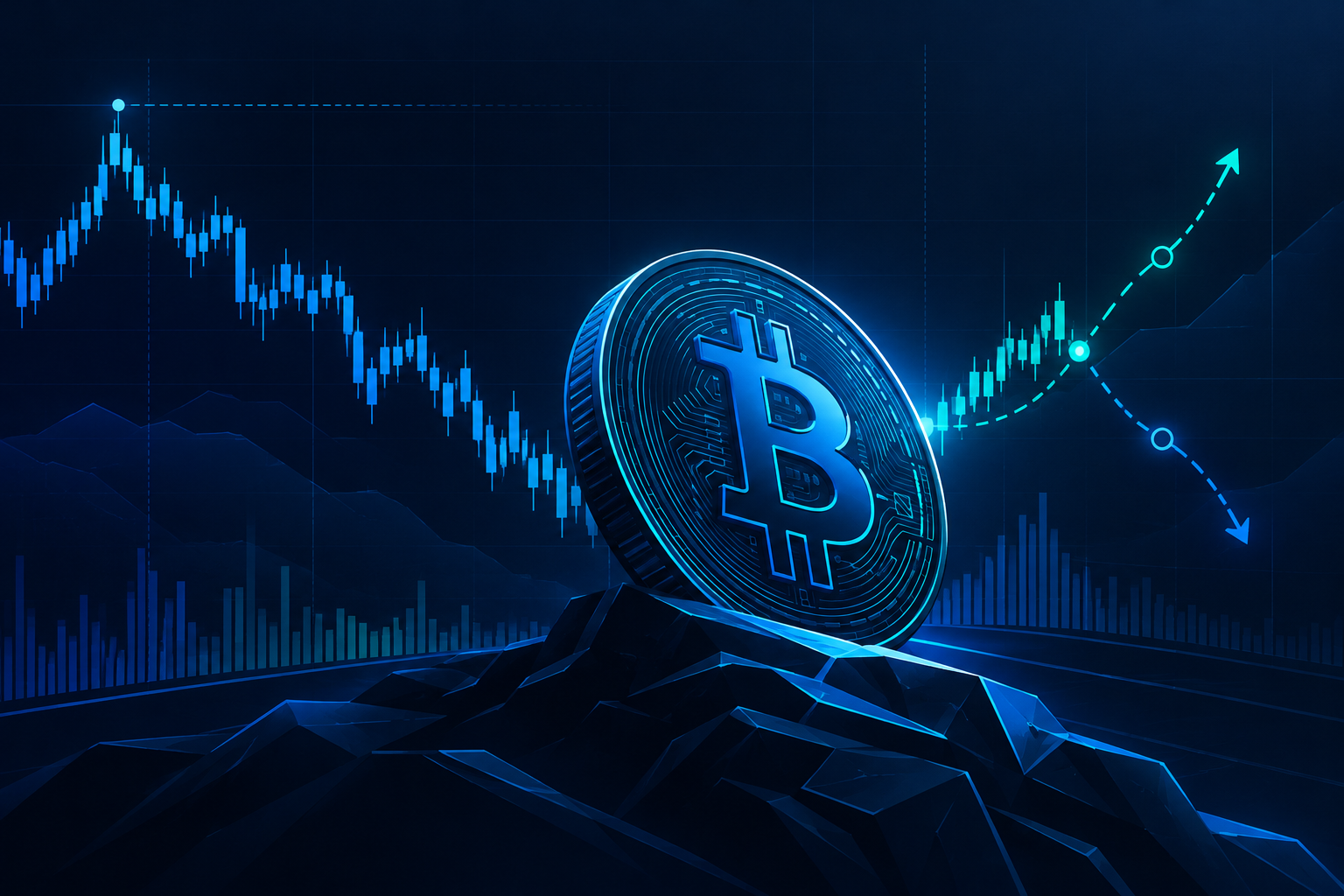
In this article, we’ll explore whether now is a good time to buy Bitcoin, what historical drawdowns reveal about its risks, how to determine your investment amount and time horizon, the difference between lump-sum investing and buying gradually, and how to choose a storage method while protecting your assets.
Whether to buy bitcoin now is a question no forecast can answer: it depends on when you will need the money, how much you can leave untouched for years and whether you could live through a fall of more than 75%, which bitcoin has gone through twice since 2017. Below are the questions worth answering before you decide, with our data on nine years of bitcoin drawdowns; there is no recommendation here to buy or not to buy.
Should I buy bitcoin now? Where the market stands in October 2026
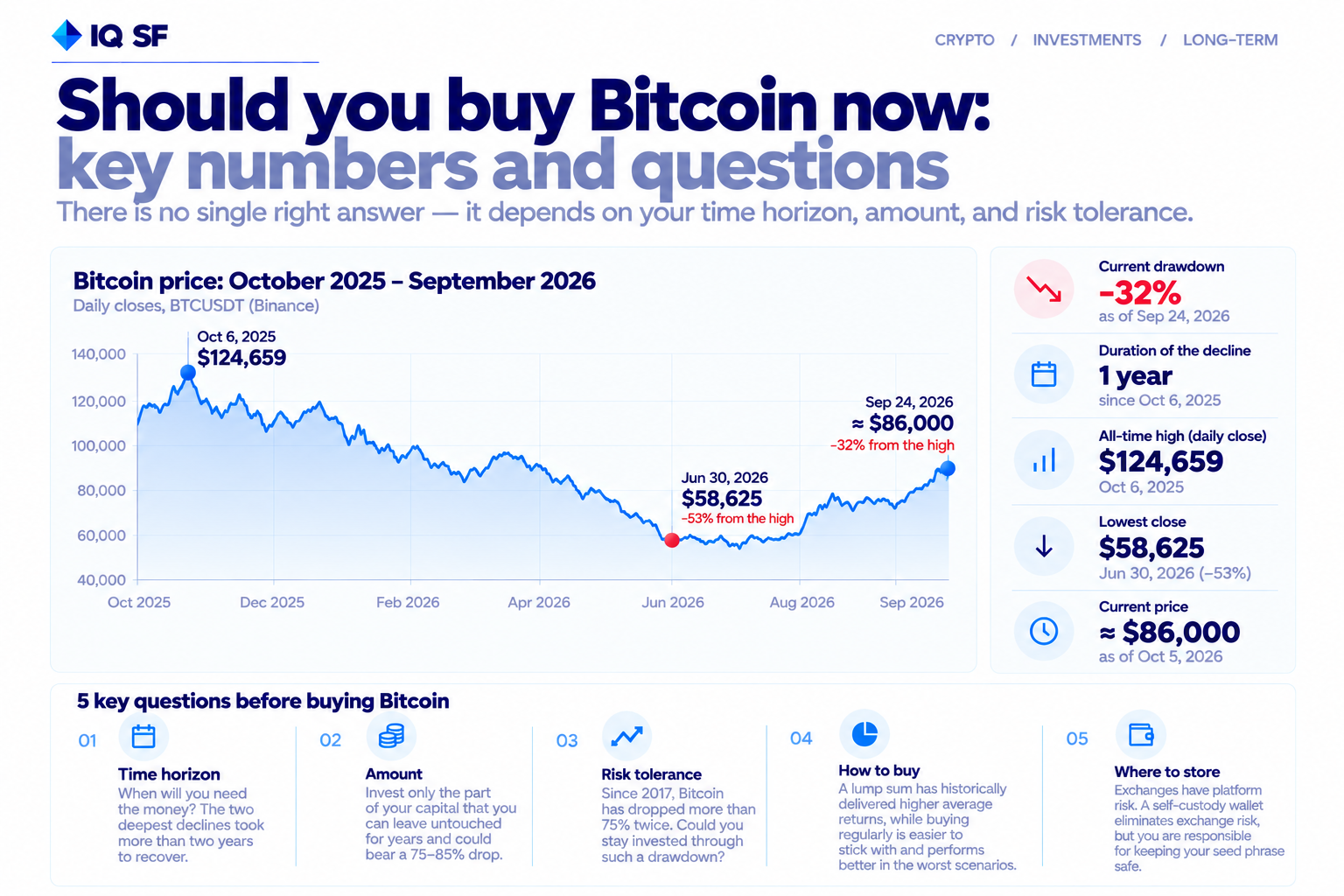
In October 2026, bitcoin is in a drawdown: by our calculation, its highest daily close of $124,659 came on October 6, 2025, the lowest close since then of $58,625 on June 30, 2026, and on September 24 the price was 32% below the high.
On October 5, 2026, bitcoin traded around $86,000. A drawdown by itself makes a purchase neither good nor bad: since August 17, 2017, bitcoin closed more than 20% below its all-time high on 72.2% of days and set a new high on only 106 days, 3.2% of the series (daily closes of BTCUSDT on Binance). On almost any day in bitcoin's history, the price was below an earlier peak. The current decline is deep, -53% at the bottom, and has lasted a full year, since October 6, 2025.
The backdrop keeps shifting too. On September 16, 2026, the Federal Reserve raised its target range to 3.75%-4%, its first hike since 2023, while US spot bitcoin ETFs, according to SoSoValue data, turned their 2026 flows positive by September 26 after $5.8 billion of outflows as of July 13. That describes conditions, not a signal: analysts read the same facts in opposite directions.
Your time horizon: when will you need the money?
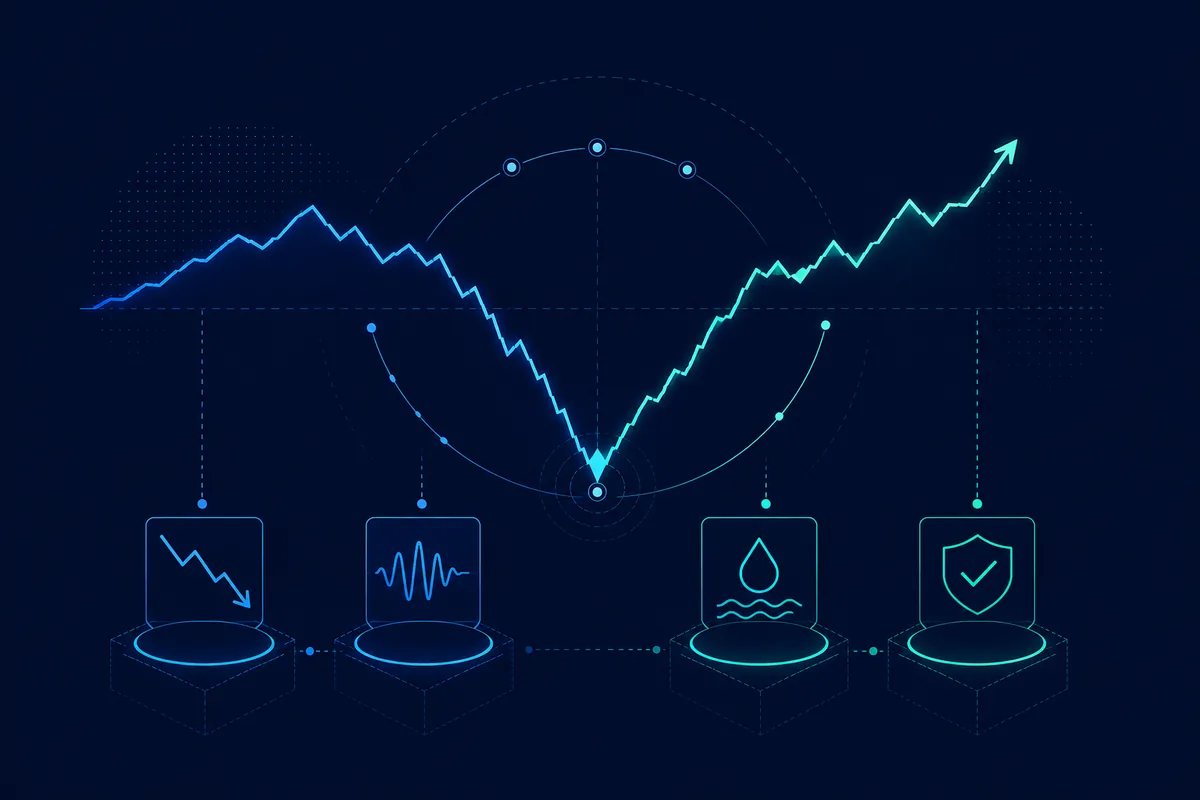
Your horizon matters more than your entry price: by our calculation, bitcoin's two deepest declines took 847 and 1,074 days to recover, more than two years each.
Declines of 20-35% recovered in 12-238 days, those of 50% or more in 189-1,074 days. If the money is needed by a specific date within two or three years (a home down payment, tuition, an emergency reserve), history says you may have to withdraw it during a drawdown. A long horizon reduces the role of timing, but nobody guarantees a return to the high: nine of ten declines deeper than 20% ended, and the tenth is still under way. The math of recovery is explained in our article on recovery after a drawdown.
How much of your portfolio to put in bitcoin
The size of a bitcoin position comes down to a calm amount: one whose 75-85% fall would not change your plans or force you to sell at the bottom.
Decline from the high | What's left of $100,000 | Gain needed to recover | How long recovery took |
-20% to -35% | $80,000 to $65,000 | +25% to +54% | 12-238 days |
-53.1% (2021) | $46,900 | +113% | 189 days |
-76.6% (2021-2024) | $23,400 | +327% | 847 days |
-83.2% (2018-2020) | $16,800 | +495% | 1,074 days |
The amount is illustrative; the declines and durations come from our calculation on daily closes. If what's left in the bottom two rows would force you to sell or drop your plans, your calm amount is smaller. A target share also needs upkeep: after a strong rally, a small position can quietly grow into a large one, so some investors check the share once or twice a year and bring it back to the target. Leverage changes the question entirely: by our calculation for 2017-2026, at 3x leverage 7.1% of long positions would have hit liquidation within a month, at 10x 47.3% (no stop-loss, no added margin). How to read drawdowns is covered in our article on drawdown and maximum drawdown.
Lump sum or dollar-cost averaging?
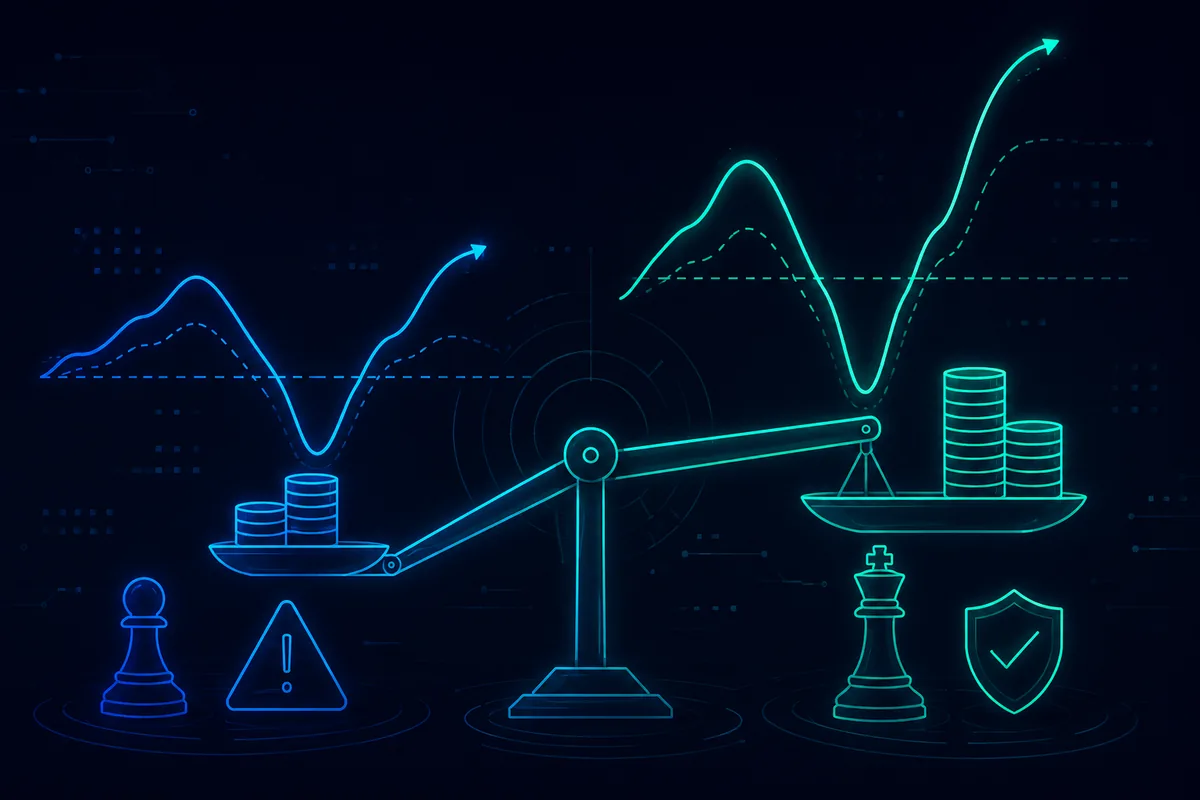
A lump sum tends to earn more on average, while buying in installments is easier to live with and wins in the worst scenarios; the choice depends on how you handle losses.
In Vanguard's research on stock markets from 1976 to 2022, investing everything at once beat cost averaging over three months in 61.6%-73.7% of rolling one-year periods, depending on the market, but cost averaging came out ahead in the worst periods. Vanguard's conclusion: investors with higher loss aversion are better off drip-feeding their money. The study covers stocks, and bitcoin's declines are deeper: twice more than 75% since 2017.
Installments only help if the rule is set in advance: amount, frequency and end date, for example an equal amount once a month for a year. Without a rule, they turn into an attempt to guess the bottom.
Where to keep bitcoin: exchange or your own wallet
Bitcoin on an exchange is protected by the exchange's obligation to return it, and in your own wallet by whoever holds the key; both options carry risk.
In November 2022, the FTX exchange collapsed and its customers lost $8 billion. A self-custody wallet removes platform risk but adds its own: lose the seed phrase and the coins are gone, leak it and they are stolen. That is why storage is worth planning in advance, with the seed phrase kept off your phone, out of the cloud and out of chats.
Spot bitcoin ETFs, trading in the US since January 2024, are a third format: there are no keys to lose, but you own fund shares rather than coins and pay an annual fee.
Before you buy bitcoin: five questions to answer
A decision to buy bitcoin comes down to five questions: time horizon, amount, tolerance for a fall, buying method and storage.
1. When will you need the money? If by a specific date within two or three years, you may have to withdraw it during a drawdown: bitcoin's two deepest declines took more than two years each to recover.
2. How much can you leave untouched for years? Emergency savings and money for near-term goals don't belong in that amount.
3. Could you live through a fall of 75-85%? Since 2017, bitcoin has lost 76.6% and 83.2%; if what's left after such a fall would force you to sell or drop your plans, your calm amount is smaller.
4. Lump sum or installments? A lump sum tends to earn more on average, installments are easier to live with, but they only help if the amount, frequency and end date are set in advance. Buying with leverage adds the risk of liquidation.
5. Where will you keep the coins? An exchange carries platform risk, your own wallet the risk of losing or leaking the seed phrase, so storage is worth planning before you buy.
This list leaves out rules and taxes: they depend on the country you live in.
This material is for information only and is not individual investment advice.
Frequently asked questions
Is now a good time to buy bitcoin?
No one can know in advance. Bitcoin was 32% below its high on September 24, 2026, but a drawdown is bitcoin's usual state: it closed more than 20% below its high on 72.2% of days since 2017. A more useful question is what you would do if the price fell another 50%.
How much of my savings should go into bitcoin?
Only an amount you can leave alone for several years and whose 75-85% fall would not change your plans: in two cycles since 2017, the price lost 76.6% and 83.2%. Emergency savings and money for near-term goals don't belong in that amount.
Is it better to buy bitcoin all at once or over time?
On stock markets, a lump sum beat installments in 61.6%-73.7% of one-year periods in Vanguard's research, but installments did better in the worst periods. If a sharp fall right after a purchase would push you to sell, a fixed installment schedule is easier to stick with.
Is it safer to keep bitcoin on an exchange or in your own wallet?
Each option carries its own risk. On an exchange, your coins are protected by the exchange's obligation to return them, and an exchange can go bankrupt, as FTX did in November 2022. In your own wallet, they are protected by whoever holds the key: lose the seed phrase and the coins are gone, leak it and they are stolen.